

Declare Imputed Income
For those who own a property in Spain that is used privately or not rented out part of the year. Estity helps you prepare and submit Modelo 210 digitally.Imputed Income
For those who own a property in Spain and use it privately or have it available for personal use throughout the whole or part of the year.
Declare through Estity
Estity is registered as a Social Collaborator with the Spanish tax authority, Agencia Tributaria (AEAT), and can submit declarations digitally for our clients.


WHAT APPLIES?
What is imputed income for a non-resident property owner?
As a non-resident owner of a property in Spain, you may need to declare tax even during periods when the property is not rented out. In the Spanish tax system, a property used privately or available to the owner is treated as an imputed real estate income, renta inmobiliaria imputada.
This does not mean that you have actually received any income. Instead, the tax is calculated based on the property's valor catastral (assessed value), the cadastral value that is normally found on your IBI notice.
The imputed income is declared through Modelo 210. If the property is owned by several people, each owner normally declares their share based on their ownership percentage.
Good to know: If the property has been rented out during parts of the year, the rental periods are treated separately. You may therefore need to declare both imputed income and rental income for the same property and year.
Declare Model 210 with Estity
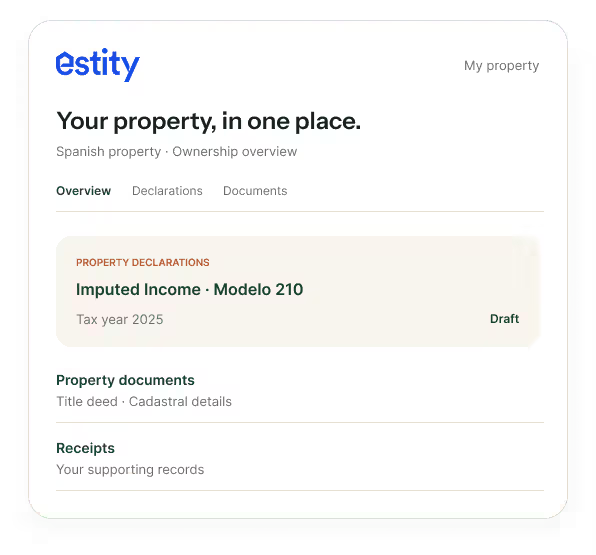
Add the property – Enter basic information about the property and ownership.
Complete the declaration information – Estity guides you through the information required for the imputed income.
Check the calculation – You see the basis and the calculated tax before the declaration is finalized.
Submit – The declaration is submitted digitally to Agencia Tributaria. The declaration receipt is uploaded to your portal in Estity or sent out via email.
Multiple owners – If the property has multiple owners, the declaration is made based on each owner's share and situation.
WHAT DO YOU NEED?
Have this at hand when you start.
IBI Notice
For, among other things, the cadastral value and property details.
NIE number
Your Spanish identification number.
Ownership share
How much of the property you own.
Usage during the year
Information about the ownership period and any rental.
DO YOU WANT TO CALCULATE FIRST?
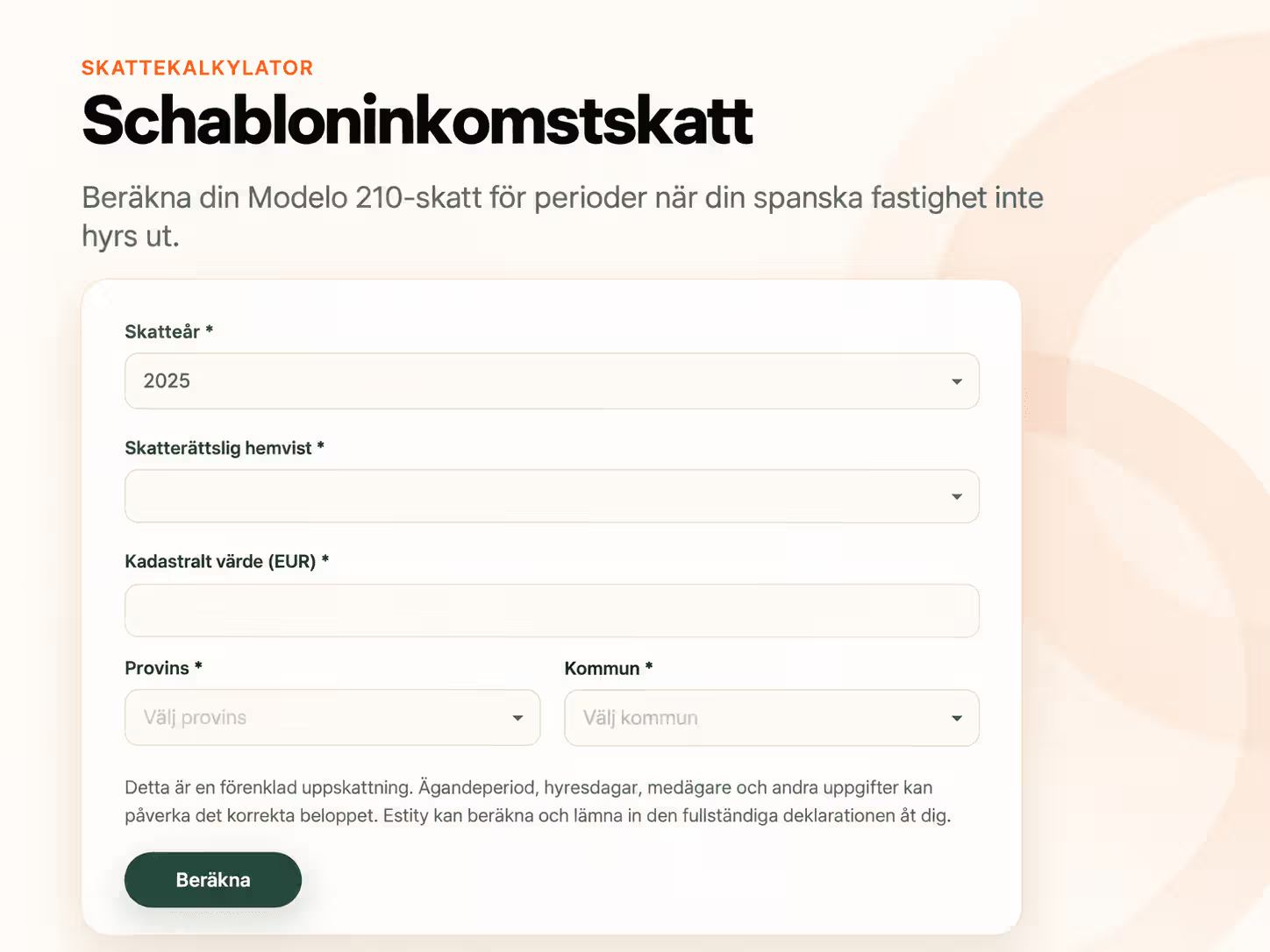
Estimate your standard income tax
Do you want to get an idea of the tax before you start the declaration? Use our free calculator to make a quick estimate.
WHEN SHOULD I DECLARE?
When should the imputed income be declared?
Imputed income is declared the year after the year to which the declaration pertains.
- Are you declaring for the income year 2025? → The declaration is submitted in 2026.
- Are you declaring for the income year 2026? → The new deadlines apply and the declaration is submitted in 2027.
Estity shows which period and deadline apply for the declaration you are working with.
¿Debo declarar incluso si no he estado en la vivienda durante el año?
Sí, normalmente. No es la cantidad de días que realmente te encuentras en la vivienda lo que determina si se debe declarar el ingreso imputado.
Si la vivienda está a tu disposición y no está alquilada, puedes estar sujeto a la renta imputada como persona no residente. Esto se aplica incluso si no has viajado a España en todo el año.
El cálculo normalmente se basa en el valor catastral de la vivienda y la parte del año en que la vivienda ha estado a tu disposición. Por lo tanto, hay una diferencia entre que la vivienda esté vacía y que esté alquilada, pero una vivienda vacía no significa que desaparezca la obligación de declarar.
¿Necesita cada propietario presentar su propio Modelo 210?
Normalmente, cada propietario no residente declara su parte según su participación.
¿Qué necesito para hacer la declaración?
Necesitas, entre otras cosas, datos sobre la vivienda, valor catastral, porcentaje de propiedad, NIE e información sobre cómo se ha utilizado la vivienda durante el año.
¿Qué pasa si he alquilado la vivienda una parte del año?
Los períodos de alquiler y los períodos de uso privado se tratan por separado. Por lo tanto, es posible que necesites declarar tanto los ingresos por alquiler como los ingresos estimados.
¿Dónde puedo encontrar el valor catastral para usar en la declaración?
El valor catastral se encuentra normalmente en su aviso de IBI, en su escritura (Escritura), y en la información con el Catastro español.
Es importante usar el valor catastral y no el valor de mercado de la propiedad o el precio de compra. El valor catastral es un valor administrativo utilizado, entre otras cosas, en el cálculo del IBI y de la renta imputada.
Si la propiedad carece de un valor catastral establecido o notificado, existen reglas especiales. Para la renta imputada, normalmente se utiliza el 50% del más alto de ciertos valores alternativos, como el valor de adquisición o un valor determinado por la autoridad fiscal para otros impuestos.
¿Puede Estity presentar el Modelo 210 por mí?
Sí. Puedes proceder desde la calculadora y gestionar tu Modelo 210 a través de Estity. Estity está registrado como Colaborador Social con la Agencia Tributaria (AEAT) de España.
¿Puedo calcular primero aproximadamente cuánto será el impuesto?
Sí. La calculadora gratuita de Estitys te ofrece una estimación antes de que comiences la declaración.