
Capital Gains Tax on Property Sale in Spain
As a non-resident, you are taxed in Spain on the capital gain that arises when you sell a Spanish property. Here you can estimate the gain, the tax, and how the buyer's mandatory 3% withholding affects the final result.
- 1 Purchase
- 2 Sale
- 3 Result
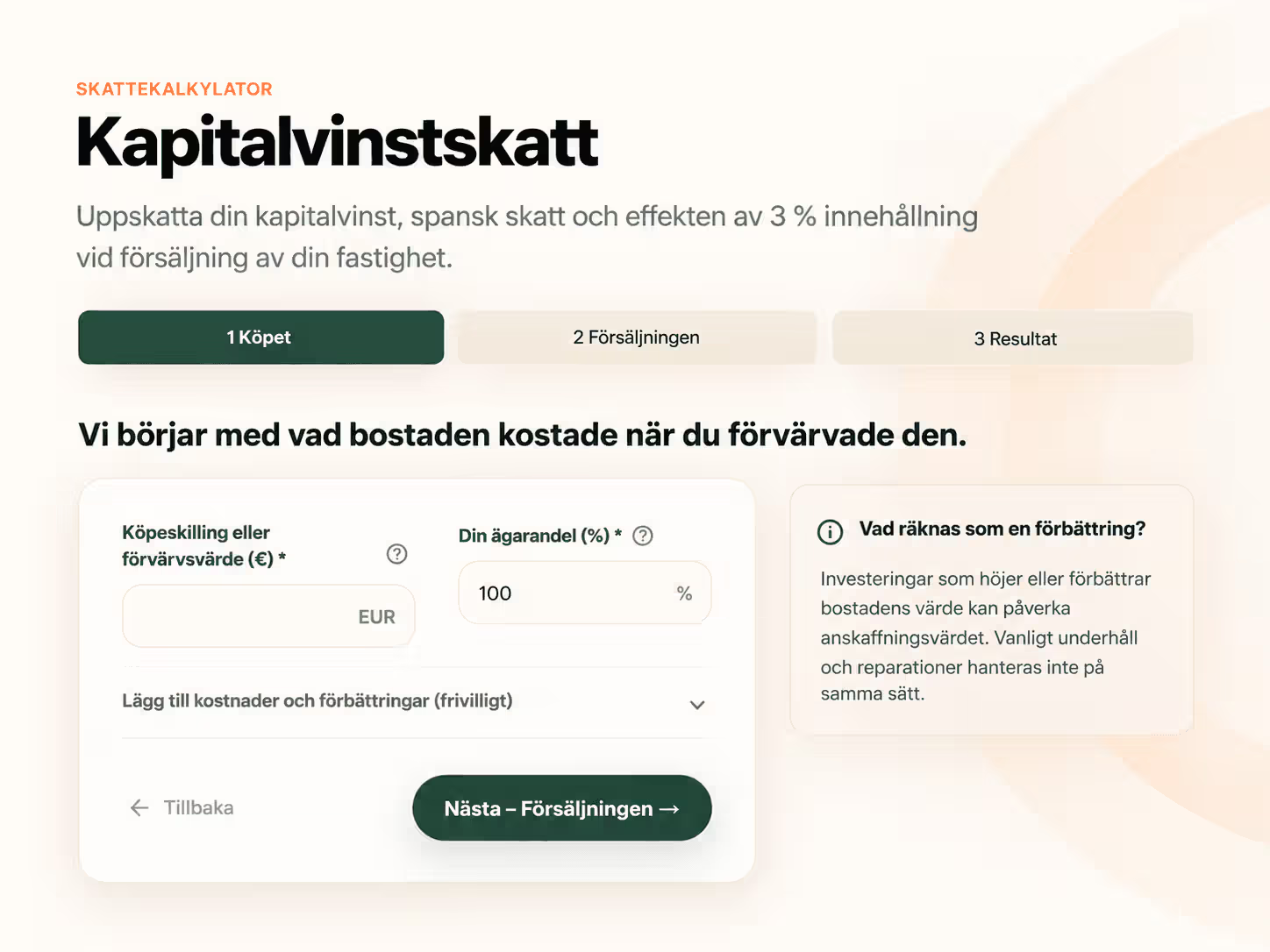
We start with what the property cost when you acquired it.
What counts as an improvement?
Investments that raise or improve the property's value can affect the acquisition cost. Ordinary maintenance and repairs are not treated the same way.
Estity is registered as a Social Collaborator with the Spanish tax authority, Agencia Tributaria (AEAT).


WHAT APPLIES?
What is capital gains tax when selling a property in Spain?
When a non-resident sells a property in Spain, any capital gain is taxed in Spain. The capital gain is primarily calculated as the difference between an adjusted sales value and an adjusted acquisition value.
The acquisition value can include the purchase price, certain costs and taxes related to the purchase, as well as investments and improvements. Regular maintenance and repairs, however, are not considered improvements in this calculation. From the sales price, costs and taxes directly related to the sale and paid by the seller can reduce the sales value.
For capital gains arising from the sale of a property, the tax rate for a non-resident is normally 19%, regardless of whether the seller is resident within or outside the EU/EEA.
Good to know: The 3% withheld by the buyer at the sale is not the capital gains tax. It is a preliminary payment to the Spanish tax authority that is later offset against the seller's final tax.
THE CALCULATION
How is the capital gains tax calculated?
In simplified form:
Adjusted sales value – adjusted acquisition value = capital gain
Then:
Capital gain × 19% = estimated capital gains tax
I would show this as a graphic flow similar to the formula on the standard income page.
Acquisition value
The starting point is what you paid when you acquired the property. To this can be added:
- taxes and fees related to the purchase
- notary and registration costs
- certain other acquisition costs
- investments and documented improvements
Interest costs are not included in the acquisition value.
Sales value
The starting point is the sales price. Costs and taxes directly related to the sale and borne by the seller can reduce the value used in the capital gains calculation.
Important if the property has been rented out
When a rented property is sold, the acquisition value must be reduced by the tax depreciation applicable during the rental period. AEAT states that the minimum tax depreciation should be considered even if the owner has not actually made the deduction in previous declarations. This may result in a higher taxable capital gain.
3% WITHHOLDING
What does 3% withholding mean at the sale?
When the seller is a non-resident, the buyer is obliged to withhold 3% of the agreed purchase price and pay the amount to Agencia Tributaria. The buyer reports the payment through Modelo 211 within one month from the sale. Agencia Tributaria
The amount serves as an advance payment of the seller's capital gains tax.
This means:
Sales price × 3% = withheld amount
Then the 3% amount is compared with the final capital gains tax.
If the tax is higher than the 3% amount
The seller pays the difference.
If the tax is lower than the 3% amount
The seller can request a refund of the excess amount from Agencia Tributaria through their declaration.
3% withheld → final tax calculated → pay the difference or get a refund
MODELO 210
When should the capital gain be declared?
As a non-resident, the seller declares the capital gain through Modelo 210.
The deadline is specific for property sales: the declaration must be submitted within three months after the first month from the sale date has expired. This means in practice that the process should be completed within four months from the sale. Agencia Tributaria
Before this, the buyer has their own obligation to pay the withheld 3% portion through Modelo 211 within one month from the sale. Agencia Tributaria
Sale
→ within 1 month: buyer pays 3% via Modelo 211
→ within 4 months: seller submits Modelo 210
MODELO 210
Do you want to go from calculation to declaration?
Estity helps you calculate the capital gain
Is 3% withholding the final tax when I sell?
Not necessarily. For a non-resident sale, the buyer normally withholds 3% of the purchase price as an advance against capital gains tax. The final calculation may show a further amount to pay or a potential refund.
What is the capital gains tax rate for a non-resident?
Capital gains from the sale of properties are normally taxed at 19% for non-resident individuals.
What happens if 3% is more than my final tax?
If the withheld amount exceeds the final tax, the seller can request a refund of the difference through Modelo 210.
What costs can increase my acquisition value?
Certain costs and taxes related to the purchase as well as documented investments and improvements can be included. However, regular maintenance and repairs are not considered improvements in the same way.
How does previous renting affect the capital gain?
For a property that has been rented out, the acquisition cost may need to be reduced by the minimum tax depreciation for the rental periods, even if the depreciation has not actually been claimed in previous tax returns. This can increase the taxable capital gain.
When should Modelo 210 be submitted after the sale?
Modelo 210 for the capital gain should be submitted within three months after one month has passed from the date of sale.
Who pays the 3 percent?
It is the buyer who must withhold 3% and pay the amount to Agencia Tributaria through Modelo 211.